 Bookmark/share a post
clock

digital clock
Get your own Digital Clock

- La Casa Blanca publica la foto de Donald Trump y María Corina Machado con la medalla del Premio Nobel de la Paz enero 16, 2026La imagen publicada muestra a Trump posando con la medalla enmarcada, mientras Machado permanece a su lado.El Universo
on line

people online
calendar
| L | M | X | J | V | S | D |
|---|---|---|---|---|---|---|
| 1 | 2 | 3 | 4 | 5 | 6 | |
| 7 | 8 | 9 | 10 | 11 | 12 | 13 |
| 14 | 15 | 16 | 17 | 18 | 19 | 20 |
| 21 | 22 | 23 | 24 | 25 | 26 | 27 |
| 28 | 29 | 30 | ||||
pet


pass all subjects in this semester
links
 VISITA LA FIEC

weather
Rss
09/09/09
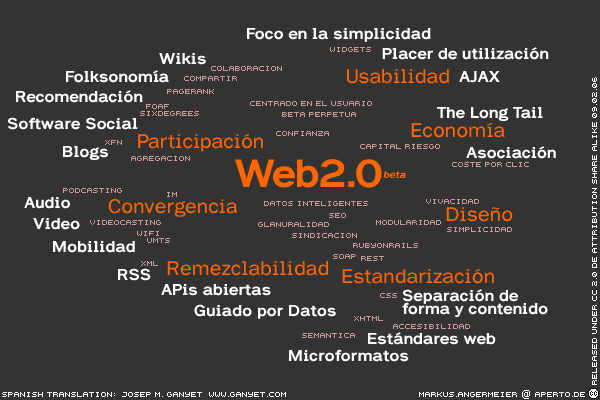
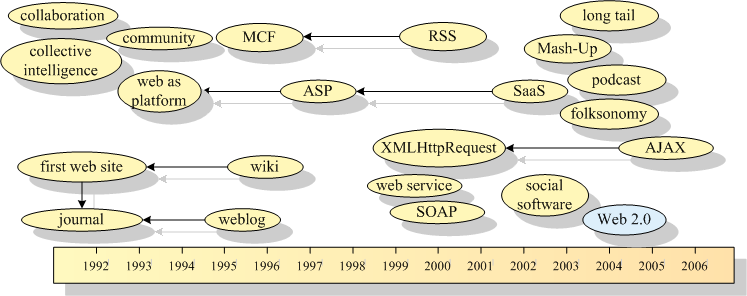
The term Web 2.0 is associated with web applications that facilitate participatory information sharing, interoperability, user-centered design,[1] and collaboration on the World Wide Web. A Web 2.0 site allows users to interact and collaborate with each other in a social media dialogue as creators (prosumers) of user-generated content in a virtual community, in contrast to websites where users (consumers) are limited to the passive viewing of content that was created for them. Examples of Web 2.0 include social networking sites, blogs, wikis, video sharing sites, hosted services, web applications, mashups and folksonomies.
The term is closely associated with Tim O'Reilly because of the O'Reilly Media Web 2.0 conference in late 2004.[2][3] Although the term suggests a new version of the World Wide Web, it does not refer to an update to any technical specification, but rather to cumulative changes in the ways software developers and end-users use the Web. Whether Web 2.0 is qualitatively different from prior web technologies has been challenged by World Wide Web inventor Tim Berners-Lee, who called the term a "piece of jargon",[4] precisely because he intended the Web in his vision as "a collaborative medium, a place where we [could] all meet and read and write". He called it the "Read/Write Web"
Characteristics
Web 2.0 websites allow users to do more than just retrieve information. By increasing what was already possible in "Web 1.0", they provide the user with more user-interface, software and storage facilities, all through their browser. This has been called "Network as platform" computing.[3] Users can provide the data that is on a Web 2.0 site and exercise some control over that data.[3][16] These sites may have an "Architecture of participation" that encourages users to add value to the application as they use it.[2][3]
The concept of Web-as-participation-platform captures many of these characteristics. Bart Decrem, a founder and former CEO of Flock, calls Web 2.0 the "participatory Web"[17] and regards the Web-as-information-source as Web 1.0.
The Web 2.0 offers all users the same freedom to contribute. While this opens the possibility for rational debate and collaboration, it also opens the possibility for "spamming" and "trolling" by less rational users. The impossibility of excluding group members who don’t contribute to the provision of goods from sharing profits gives rise to the possibility that rational members will prefer to withhold their contribution of effort and free ride on the contribution of others.[18] This requires what is sometimes called radical trust by the management of the website. According to Best,[19] the characteristics of Web 2.0 are: rich user experience, user participation, dynamic content, metadata, web standards and scalability. Further characteristics, such as openness, freedom[20] and collective intelligence[21] by way of user participation, can also be viewed as essential attributes of Web 2.0.